
The care record, written as the work is done
Care plans, notes, medication, goals and incidents live on the participant, so the worker sees what matters before the visit and the office has the evidence a plan review or an audit asks for.
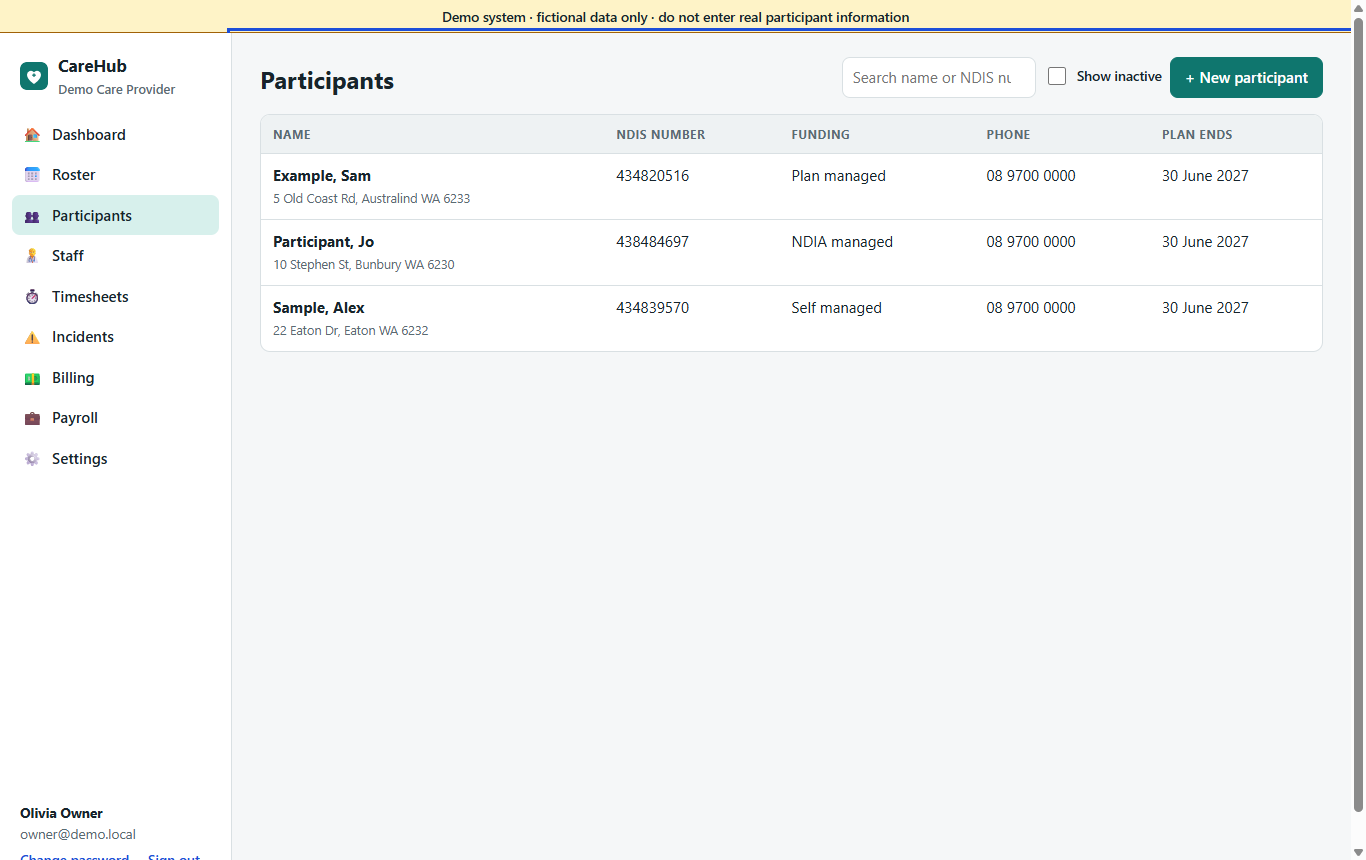
One profile with what support needs to know
- Contact and funding details, communication needs, gender and pronouns, languages and interpreter, GP, allergies and cultural needs.
- Risks and alerts the rostered worker sees before each visit.
- Import a participant list from a spreadsheet, with a preview before anything is saved.
- Archive a participant who leaves without losing their records.
- A one-page participant summary, and a handover for each visit built from the visits before it.
From the plan to the note, in one place
Care plans
Support needs by area, known triggers and coping strategies, a review date, and daily tasks that appear on the worker's visit. Each change is a new version.
Goals and milestones
A progress note says which goal it worked on and how it went; a goal report prints for the plan review.
Notes
Shift, progress and case notes, templates with headings that must be filled, drafts, attachments, search, and amendments instead of silent edits.
Note coach
Plain rules point out what a thin note is missing while it is written. It advises; it never stops a note being saved.
Care Signals
Saved notes and form answers are scanned for risk words such as a fall or a bruise. The office confirms (an incident opens, already filled in) or clears with a reason.
Custom forms
Build checklists and questionnaires, assign them to participants, staff or families with a due date, and export the answers.
Medication records that can't be quietly changed
- Each participant's medication chart, entered from the prescriber's instructions.
- The doses due during a visit appear on the worker's phone, recorded as given, refused, missed or withheld.
- As-needed doses with a reason and the effect.
- An alert when a dose is not recorded.
- A printable monthly administration record.
- No record is ever edited: a correction is an amendment beside it.
Client health at a glance
Incidents, signals, medication, goals and plan dates come together per participant and across the organisation, so the office sees who needs attention first.
No reportable incident slips past its deadline
- Anyone can report an incident: from the visit screen, the worker app or the office. Photos and documents attach to it.
- Reportable incidents start the NDIS Commission clocks: notification within 24 hours (5 business days for an unauthorised restrictive practice that caused no harm), then the 5-business-day report. Your state's public holidays are skipped.
- The deadlines show on the dashboard and alert the office.
- An investigation with findings and contributing factors, and corrective actions with owners and due dates.
- A reportable incident can't be closed until the notification, the report and the outcome are recorded.
- A printable incident report.
The Commission is notified through its own portal; CareHub records the reference and the dates.
The registers the Practice Standards expect
- Complaints and feedback: acknowledgement and resolution deadlines, actions, the outcome and whether the person was satisfied; compliments and suggestions too.
- Risk register: likelihood, consequence, rating, controls, owner and review date.
- Continuous improvement: fed from incidents, complaints, audits and staff ideas, with actions to completion.
- Restrictive practices: authorisations on file; each use recorded from the worker's phone and checked against them. An unauthorised use alerts the office and opens a reportable incident ready to complete.
See a participant's record
The demo has care plans, notes, medication and incidents for fictional participants.